Damp in an old house: gentle solutions
May 13, 2026
Humidistop choice guide: find the right device
May 13, 2026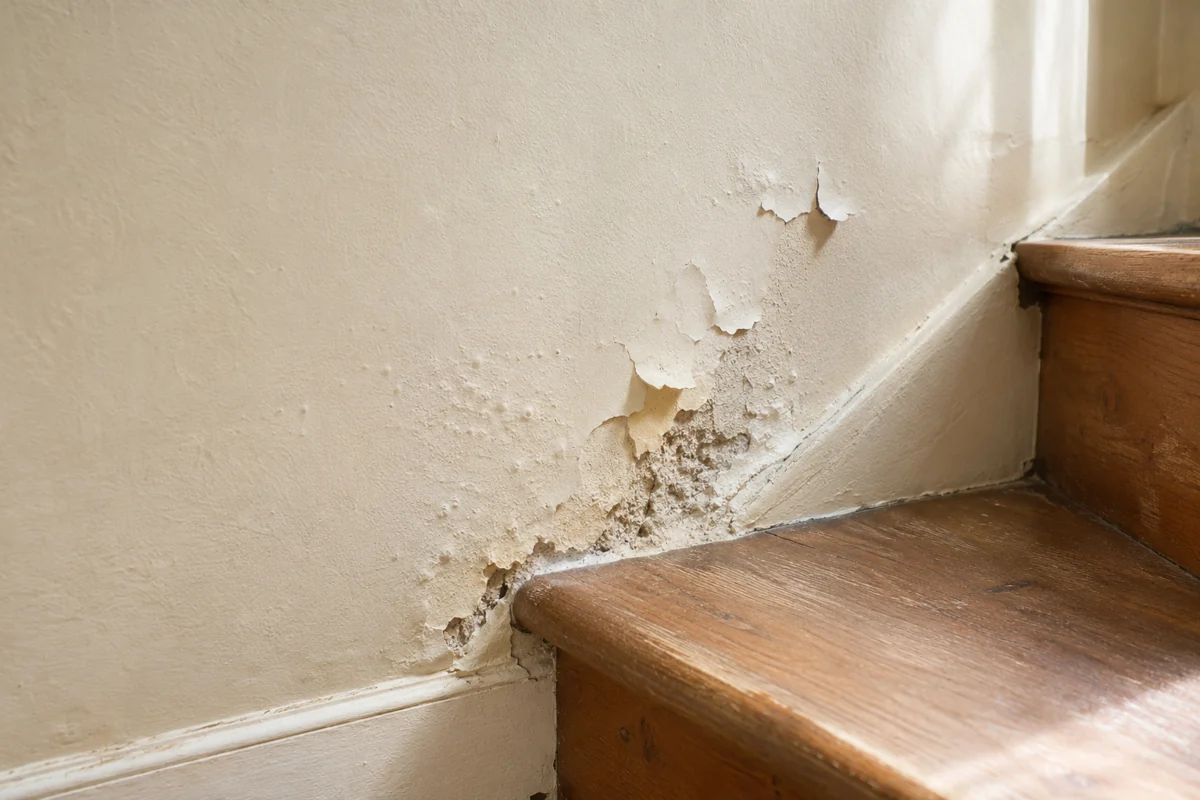
Painting a damp wall starts with the water source and substrate, not an opaque coating. New paint can temporarily hide a mark while moisture or salts remain. Investigate why the old coating is failing before adding another layer.
Distinguish the possible causes
If the patch changes after rain, check outside junctions. Beside a pipe, investigate leakage. Mould in a cold corner also calls for consideration of condensation. Low-level damp may be consistent with capillary rise but does not prove it. A paint product does not treat all these sources.
Check salts and adhesion
Record loose plaster, blisters and white deposits. Assess what can remain and what preparation is required. A surface that feels dry does not establish that the whole wall is ready. Select primer, plaster and paint as a compatible system for the existing masonry and identified salts.
Agree conditions with the decorator
Ask what substrate conditions the selected product requires and how they will be checked. Keep photographs and comparable measurement points. ATE or ATG for identified rising damp does not replace preparation or remove existing salts. A lining that merely hides the patch does not resolve the cause and may make later observation harder.