Plasterboard on damp walls: what the plasterer checks before boarding
September 28, 2026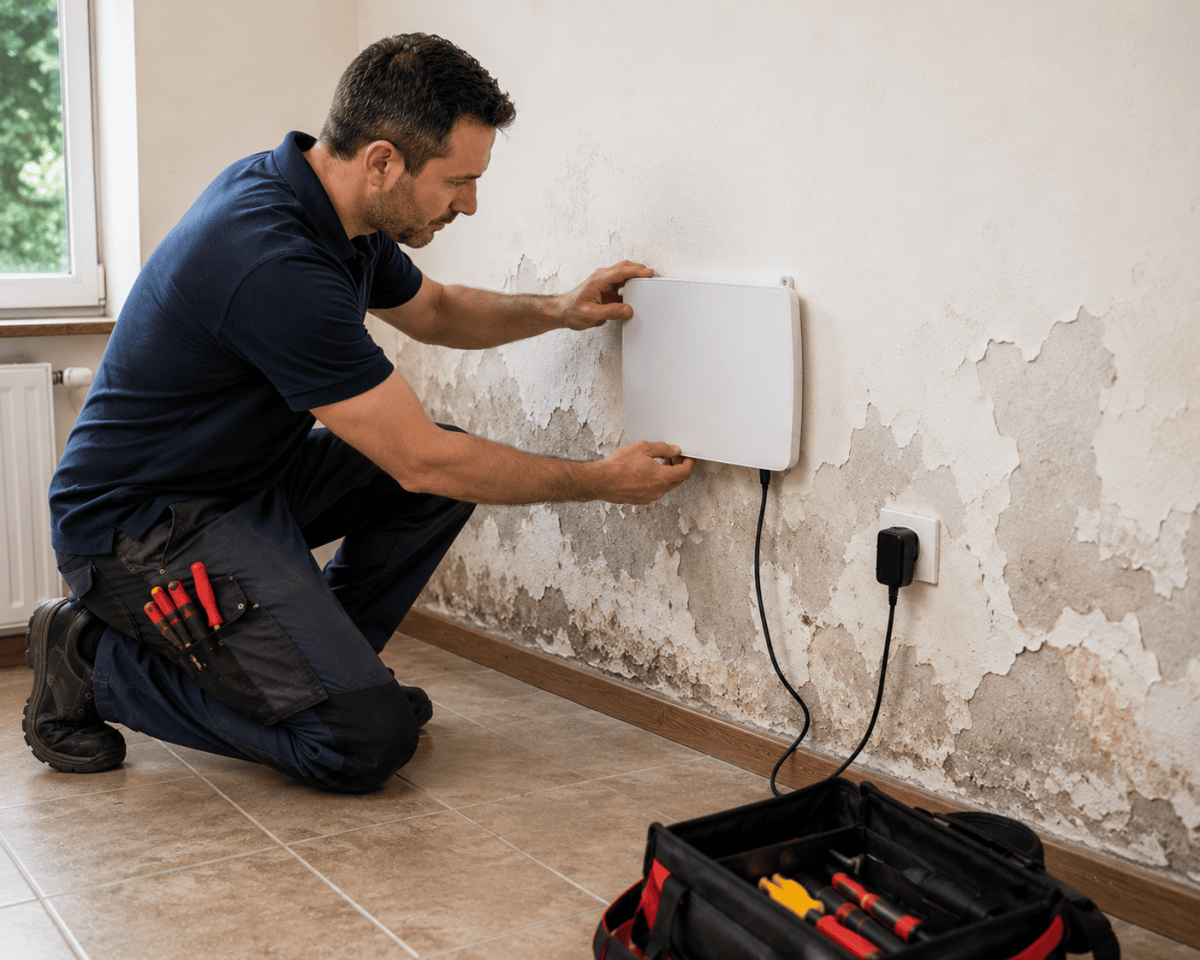
You don’t need more clients, another employee or new premises to grow a construction business. The lowest-risk route is often to sell more to the clients you already serve, with a service close to your trade. That’s exactly the profile of rising damp treatment: your clients already bring it up, fitting the device takes a few minutes, and the kit can be ordered one unit at a time from Help Humidité Pro.
How to grow a construction business: three levers, three levels of risk
Chasing new clients
Prospecting, advertising, lead-generation platforms: this lever takes time or budget, and puts you in direct competition with every other business in your area.
Revisiting your prices
Charging more for your work is often justified. But the effect stays limited by what your local market will pay for the same job.
Widening what you offer
Adding a service raises what you bill on every job. It all depends on the choice: a service far from your trade means training, new tools and new suppliers. A closely related service builds on what you already have: your clients, your site visits and your know-how.
The five tests for a service worth adding
Before committing to anything, run the idea through these five questions:
- Does the demand exist? Your clients already bring it up on site visits.
- Is the link to your trade direct? It sells at the same time as your own work.
- Is the outlay low? No machine to buy, no stock forced on you.
- Is it quick to pick up? No lengthy training before your first job.
- Is the scope clear? You know what it covers, and what it doesn’t.
Let’s run rising damp treatment by polarity inverter through that filter.
Rising damp treatment put to the test
A demand you already come across
Staining low on walls, saltpetre, swelling skirting: painters, plasterers, tilers and bricklayers see it on every renovation of an old house or a ground-floor flat. Knowing how to spot the signs of rising damp is enough to identify the jobs affected.
Simple kit to fit
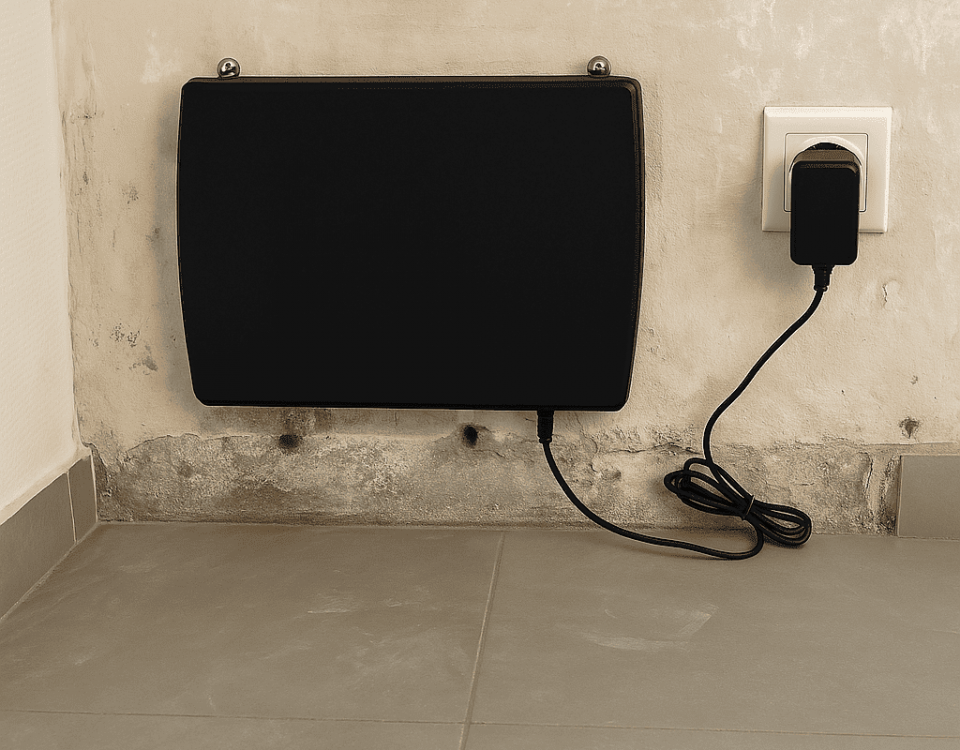
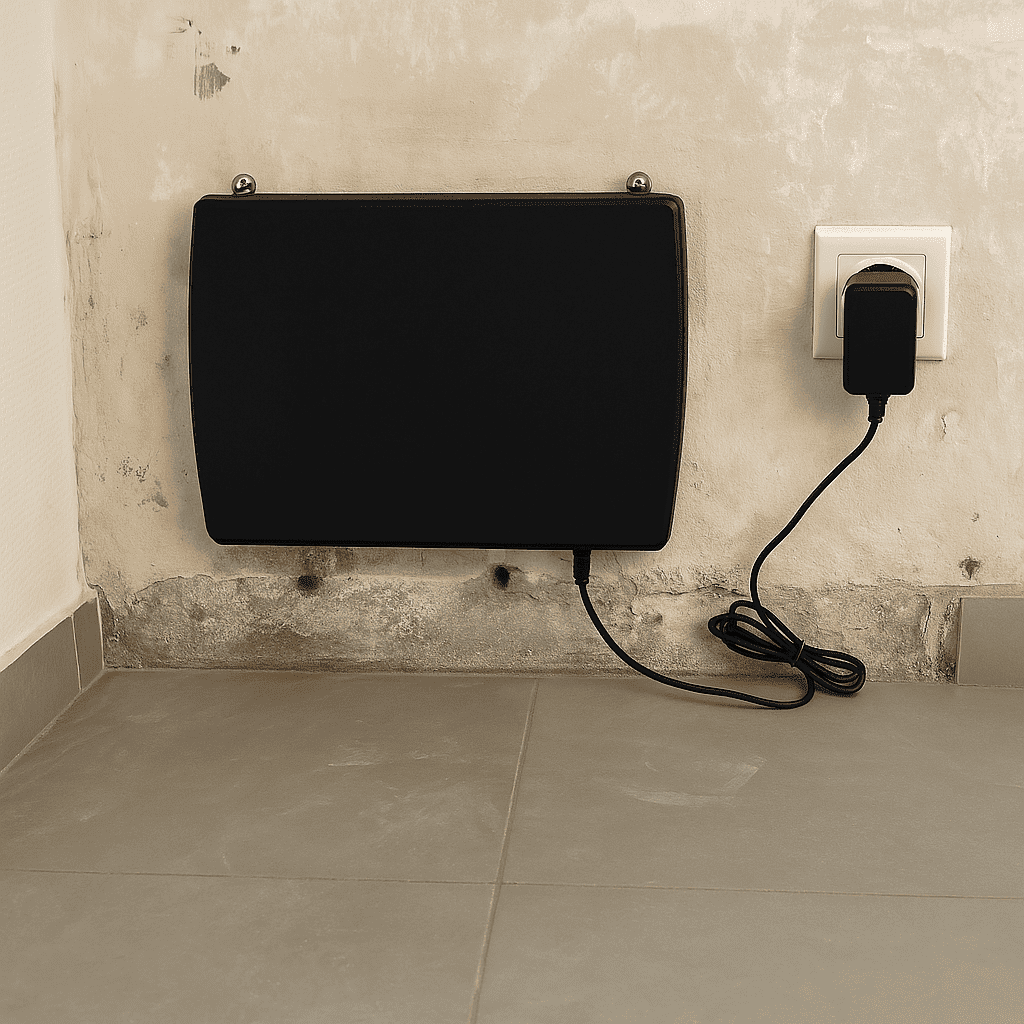
The ATE LC30 and the other electromagnetic models plug into a grounded outlet, with no drilling, no chasing and no heavy work. They run continuously, silently and with no maintenance, drawing around 0.75 W, roughly €15 a year in electricity. Without a suitable outlet, the ATG range runs with no electricity and no batteries.
No upfront outlay
There’s no stock to build up: you can buy one device at a time, with quantity discounts kicking in as volume grows. The parcel arrives free of charge within 7 working days.
Learn it from the instructions
Every device comes with its own installation note. The rules fit in a few lines: load-bearing wall, fitted low facing the dampest area, never in a corner, in direct contact with the masonry. Help Humidité Pro’s site guide lists the mistakes to avoid.
Clear limits
The device treats rising damp, and nothing else: infiltration, flooding and surface mould sit outside its scope. Following the instructions, the wall generally shows improvement within 18 to 24 months. Spelling that out at the first visit protects you from disputes later.
Adding the service to your business, step by step
Step 1: open your trade account
At Help Humidité Pro, the professionals-only online shop, signing up asks for your company details and registration number. Allow two minutes: access is approved on the spot, with trade prices unlocked straight away.
Step 2: add it to your catalogue
Add ‘rising damp treatment’ to your services on your website, your quotes and your sales documents. Help Humidité Pro provides ready-to-use text and illustrations to explain it.
Step 3: build it into your site visits
In an old house or a ground-floor flat, always check the bottom of the load-bearing walls. If the staining looks like rising damp, check for a grounded outlet nearby and measure the distance from the mounting point to the furthest damp wall: that distance sets the model.
Step 4: present a clear quote
One line for the device and its fitting, one line per associated job, then the timeframe and the manufacturer’s 10-year warranty. Attach the model’s explanatory sheet. Facing a sceptical client, this article helps you answer calmly: electromagnetic damp proofing, does it really work.
Step 5: set up follow-up
Mark the highest point of the damp area with the client, in pencil and dated. Warn them that a drying wall can look whiter for a while, as salts come to the surface. Finishing off the bottom of the wall is scheduled several months later: a natural reason to see the client again.
What the service brings to your business
- More revenue per job: the device, its fitting and the associated work all add to your invoice.
- Two sources of margin: on the kit, bought at trade price and resold at yours, and on your labour.
- Less subcontracting: the client stays yours, from diagnosis through to finish.
- Better-protected finishes: treating the cause cuts callbacks on your own work.
- Business on your own terms: no franchise, no fixed-term contract, no assigned territory.
You stay the on-site expert: diagnosis, fitting and the client relationship are down to you, and that’s your value-add. Help Humidité Pro supplies the kit. Behind it, more than 14 years’ experience with damp walls and manufacturing in Castres, in Occitania, with partner SYSELEC, in an ISO 9001-certified facility.
For your first job, coverage decides the model: the ATE LC15 covers a 15-metre diameter, the ATE Pulse covers 30, the ATE MAX covers 60 for larger volumes. A concrete example on the plastering side: plasterboard on damp walls, the plasterer’s order of work.
Frequently asked questions
Does this work for a sole trader?
Yes. Fitting the device takes a few minutes, with no drilling and no chasing. Any associated work you don’t do yourself can be passed to tradespeople in other trades.
Do I need to buy several devices to get started?
No. You buy for a signed job, one unit at a time. Payment is by bank transfer or PayPal, and free delivery takes 7 working days at most.
Can my business order from them?
Yes, as long as it has an official registration number and works in the home sector or specialist distribution. Sign-up happens at the Help Humidité Pro shop.
What if the wall is damp for another reason?
Tell the client. Infiltration is a waterproofing issue; condensation and surface mould are a ventilation issue. Refusing to sell the device in that case protects your reputation.
In summary
The simplest way to grow a construction business without unnecessary risk is often to add a closely related service to what you already sell. Rising damp treatment passes all five tests: real demand, a direct link to your work, no upfront outlay, a quick learning curve and clear limits. Two minutes to sign up, and the service can be on your next quote.