Rising damp: signs to recognise at home
May 13, 2026
Water infiltration: why a device is not enough
May 13, 2026ATE or ATG: which device should you choose?
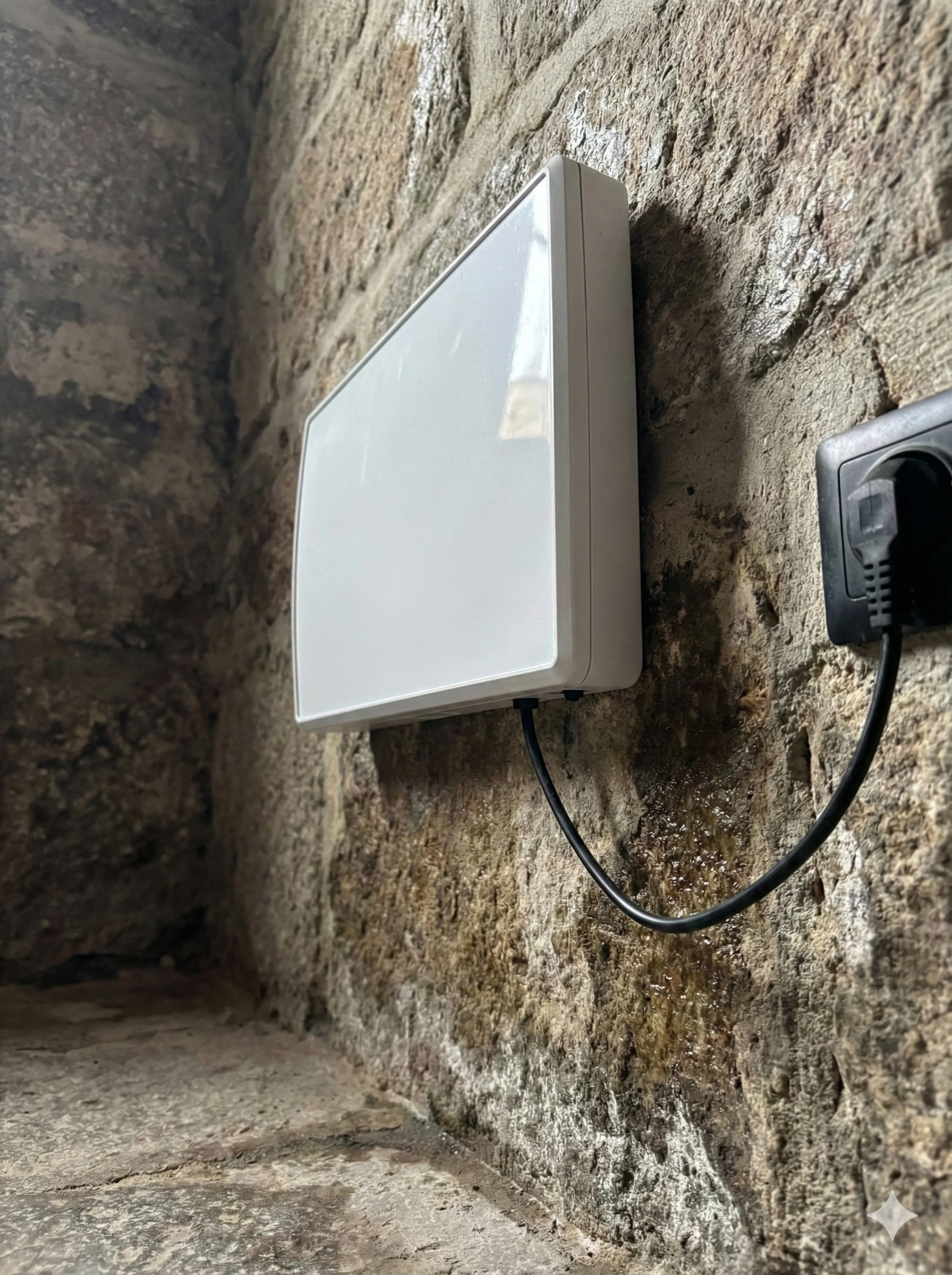
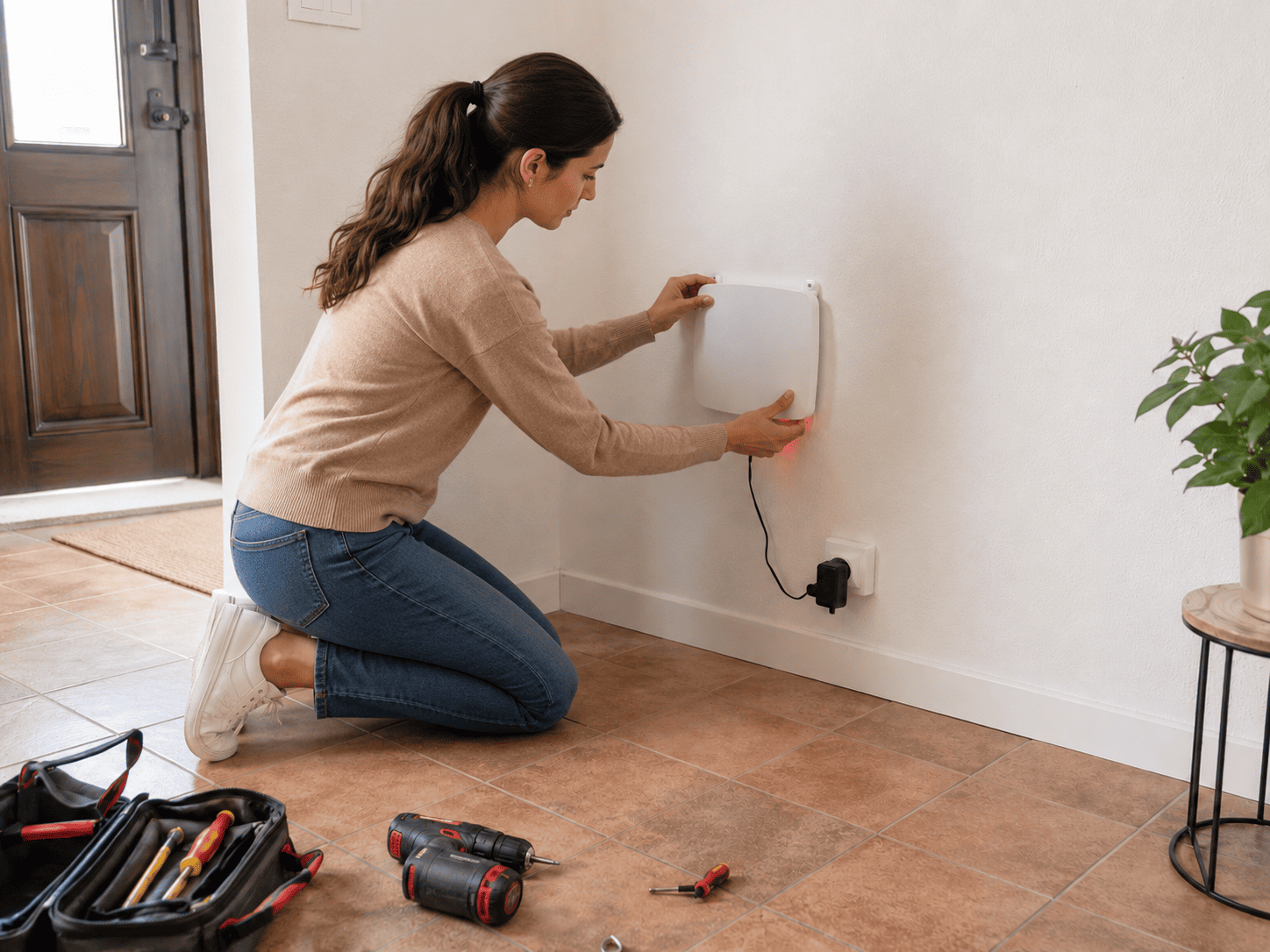
ATE uses electromagnetic technology and a permanent mains supply. ATG uses geomagnetic technology without an electrical connection. Humidistop recommends ATE first when its mounting and supply requirements can be met; ATG is an autonomous option when those conditions are unavailable.
Start with the building
Establish that rising damp is involved, then consider a suitable damp load-bearing wall, access and continuous power. A second home does not automatically require ATG: the actual installation conditions matter. Use the manual for the exact reference in either range.
Compare diameters rather than floor areas
The stated ATE diameters are 15 m for LC15, 30 m for LC30 and Pulse, and 60 m for MAX. Their radii are 7.5, 15 and 30 m. Measure from the actual mounting point to the affected areas on a plan. Greater coverage does not establish faster drying. Check the specifications of the selected ATG separately.
Check the complete purchase
Compare the device, delivery, mounting, manual and warranty conditions. Devices are manufactured in France and carry a 10-year manufacturer warranty under the applicable terms. Keep dated photographs and comparable measurements. A device does not repair leaks, rain penetration or inadequate ventilation. Ask for product advice with your plan if the proposed position is unclear.
Explore the models
ATE LC15 · ATE LC30 · ATE Pulse · ATE MAX · ATG LC15 · ATG LC30
Check the specifications and installation requirements for your chosen reference before ordering.