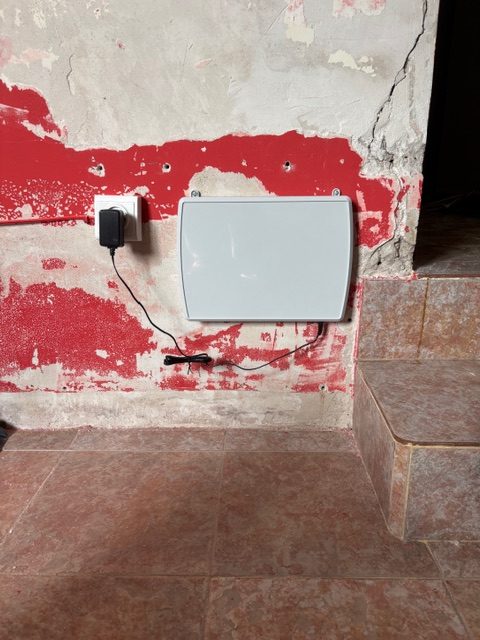
Customer ATE LC30 installation beside stairs: two views
November 22, 2026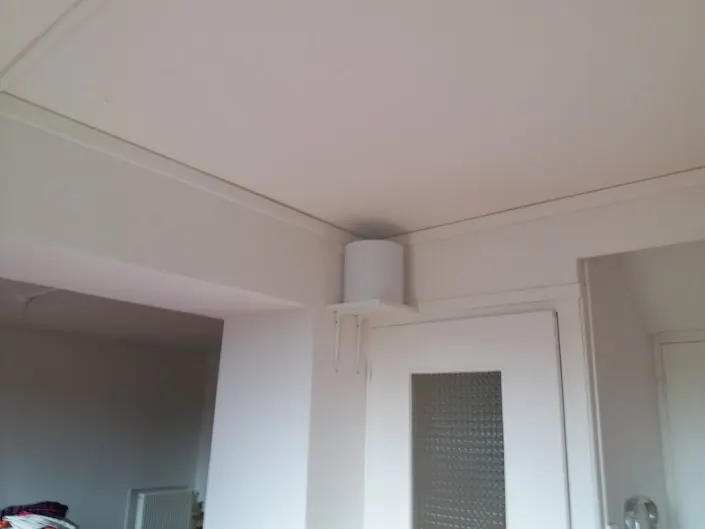
ATG installation in a home: a discreet device above a doorway
November 25, 2026Damp after resin injection: documented failures and court cases
Resin injection alone does not guarantee dry walls. French court decisions document ineffective work, inadequate advice and damage following damp-proofing interventions. These cases help consumers ask specific questions before buying a treatment.
This article concerns chemical damp-proof courses injected at the base of walls to address rising damp. It does not concern expanding resin used to stabilise foundations. The cases below were heard in France: they do not establish the law or available remedies in other countries.
A recognised technique with conditions of use
A 2017 CSTC technical publication describes situations in which silicone-based injections can be ineffective, particularly in certain mortars containing organic or bituminous materials. It also explains that damp at the foot of a wall is not necessarily rising damp. The same publication recognises the effectiveness of suitable, correctly applied injections. Its findings support a precise diagnosis, not a blanket rejection of the method.
Technical source: CSTC-Contact 2017/4, page 7
Lyon: reimbursement for ineffective work
In its judgment of 16 February 2017, case 13/11315, the Lyon first-instance court found a failure to provide appropriate advice. Treatment at the base of a wall, followed by a dehumidifier, had not resolved the damp; the expert identified insufficient crawl-space ventilation. The court awarded €3,919 including tax for ineffective work and €5,500 excluding tax for remedial work. The first amount covers several services, not injection alone. The judgment also provided for recourse against the contractor who repaired the façade.
Pontoise: an inadequate combined intervention
The Pontoise court judgment of 6 February 2026, case 24/02454, concerns injections combined with internal waterproofing. Damp and mould persisted. The judgment identified partial treatment, application defects and waterproofing that had been invoiced but not carried out. It awarded €19,150 excluding tax for remedial work, subject to the adjustment and tax provisions in the decision, and €2,000 for loss of enjoyment. These findings concern the overall service, not an inherent defect in every injection product.
Bordeaux: damage to façades
On 16 May 2012, case 11/00147, the Bordeaux Court of Appeal upheld contractual liability after injection work. The dispute concerned, among other matters, the appearance of the repaired drilling holes. It awarded €12,144 including tax for restoring two façades. This documents workmanship damage; it does not establish that the injected product failed to stop rising damp.
Read the Bordeaux appeal judgment
What these cases establish
These are individual cases of inadequate advice, ineffective services or workmanship damage. They provide no representative failure rate. The Lyon and Pontoise decisions were first-instance judgments; any subsequent appeals have not been established for this article. Any further cassation proceedings in the Bordeaux case have not been established either. A judgment hosted on the French Court of Cassation website is not necessarily a judgment delivered by that court.
Before accepting a quotation
Request a written diagnosis, the exact product and its compatibility with the wall, the areas and associated work included, comparable before-and-after measurements, responsibility for finishes, and written warranty conditions. A high price or a long warranty cannot replace an appropriate diagnosis and correct workmanship.
Discover Humidistop ATE and ATG
Humidistop supplies ATE and ATG devices as another approach to rising damp. The failure of an injection does not prove the effectiveness of a device. To compare options without injecting chemicals into the masonry, explore our mains-powered ATE range, ATG devices without an electricity supply, installation requirements and public-building and home references. Contact our team for advice based on the cause of the damp and the building layout.
- Public-building references
- Home and installation case files
- View devices and prices
- Contact our team
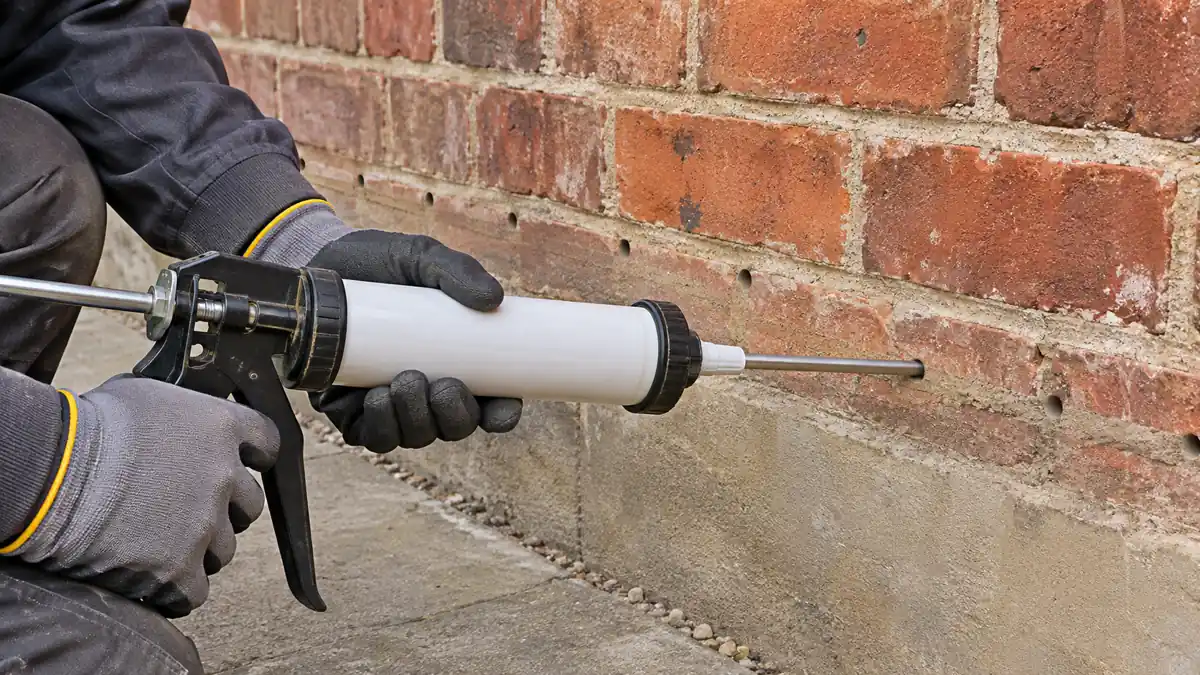
AI-generated illustration of an injection at the base of a wall; it does not depict any of the cases cited.