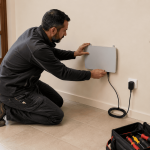
ATE: electromagnetic anti-damp device for damp walls and rising damp
May 28, 2026Rising damp treatment without building work
July 1, 2026Rising damp injection is often presented as the go to solution for treating a damp wall. Yet this resin injection stays expensive, invasive and not always suited to older homes. Before you drill into your walls, it is worth knowing a simpler alternative to dry your home for good.
Understanding rising damp before choosing a treatment
Rising damp appears when water from the ground climbs up the walls by capillary action. This phenomenon mainly affects older buildings, whose foundations have no waterproof barrier. The water moves through the masonry and leaves traces of moisture at the bottom of the walls, salt deposits, blistering render and a feeling of damp air inside the home.
To treat the problem at its root, you have to act on the cause, in other words the migration of water through the wall. A simple coat of paint or a surface render is not enough and only hides the issue for a few months.
How rising damp injection works
Injection means drilling the wall at regular intervals, low down, then injecting a water repellent resin. The aim is to create a chemical barrier within the thickness of the masonry to limit the rise of water. In some cases the method gives good results, especially on walls that are uniform, accessible and compatible with the injected product.
The limits of rising damp injection
In practice, rising damp injection comes with several constraints that are worth knowing before you commit.
- A significant budget, since the treatment is priced per linear metre of wall and requires a specialist company.
- Numerous holes drilled into the masonry, which stay visible and sometimes weaken older walls.
- Difficult diffusion in thick walls, in stone or in uneven masonry, where the product does not always spread evenly.
- A treatment that acts only on capillary action, without solving anything in the event of an infiltration, a leak or a ventilation problem.
In other words, injection remains a heavy, permanent job that is sometimes unsuited to older buildings. It is precisely for these situations that another approach deserves attention.

The anti-damp device, a no-works alternative
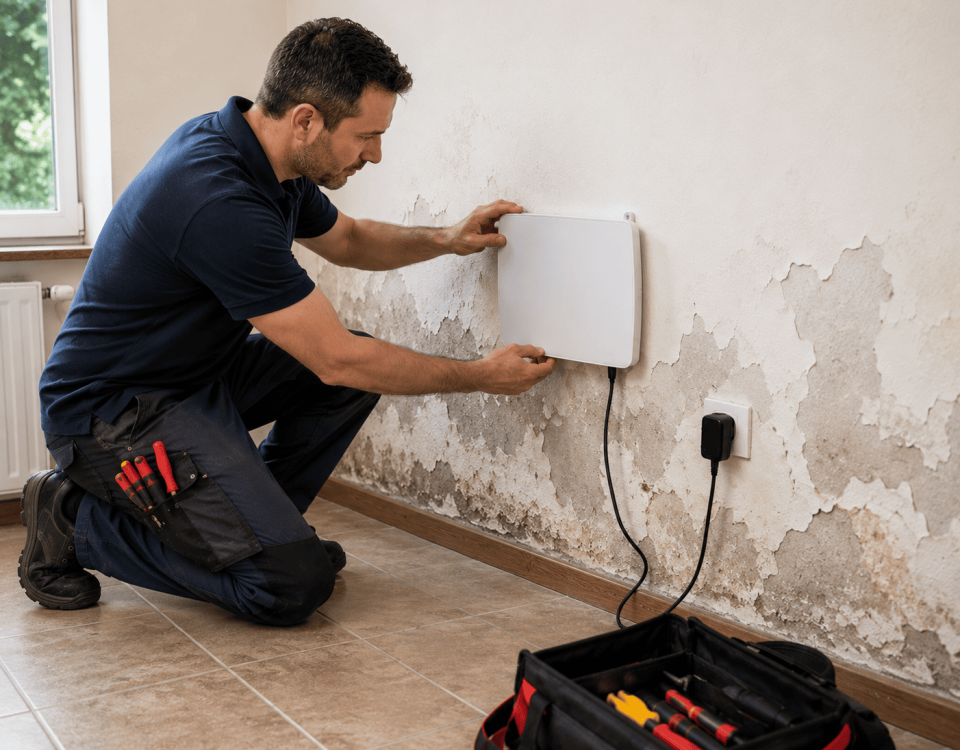
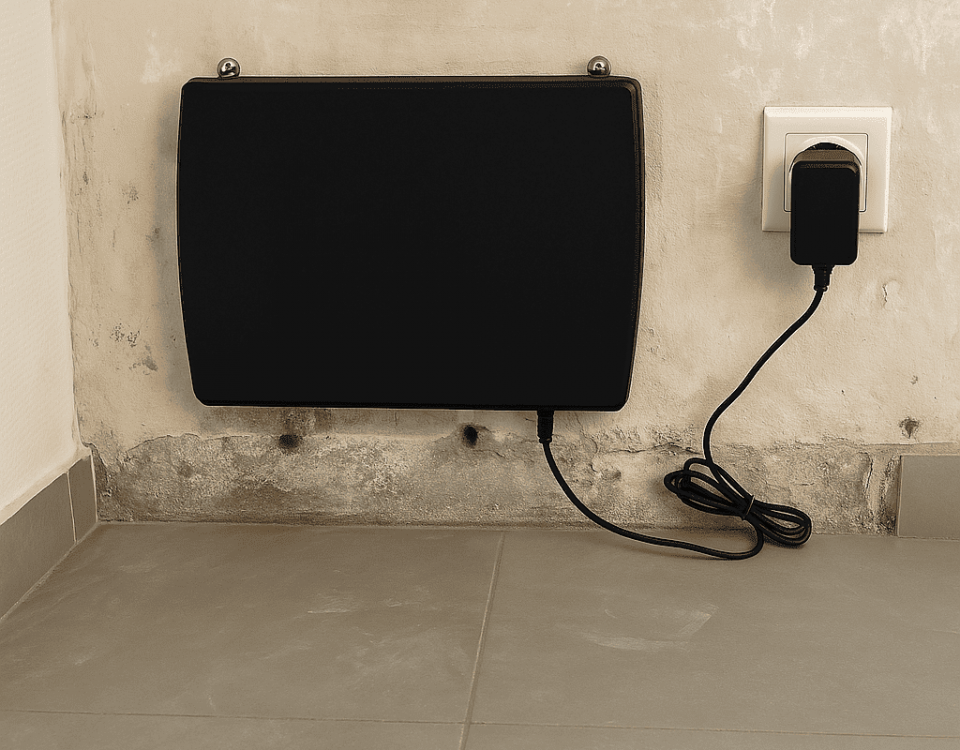
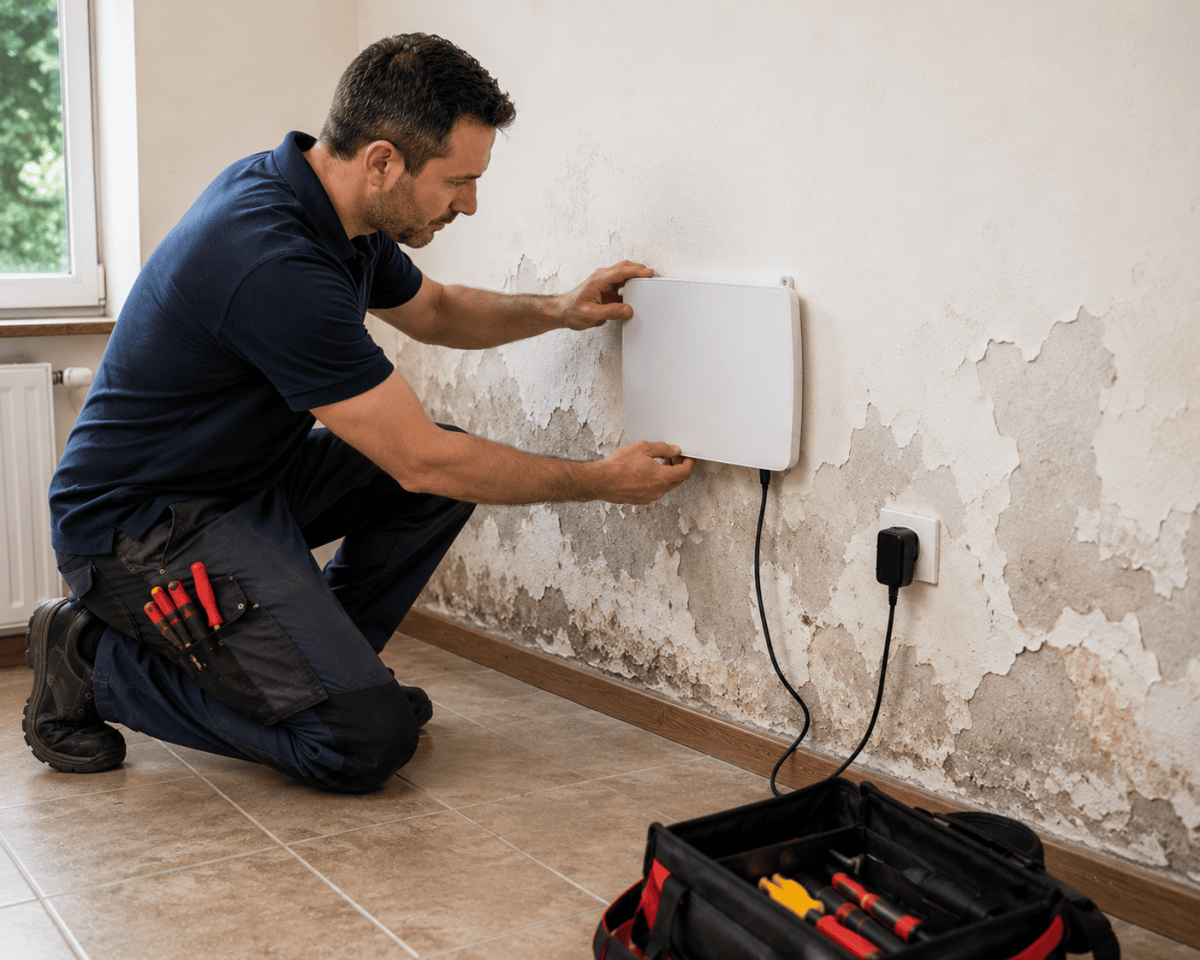
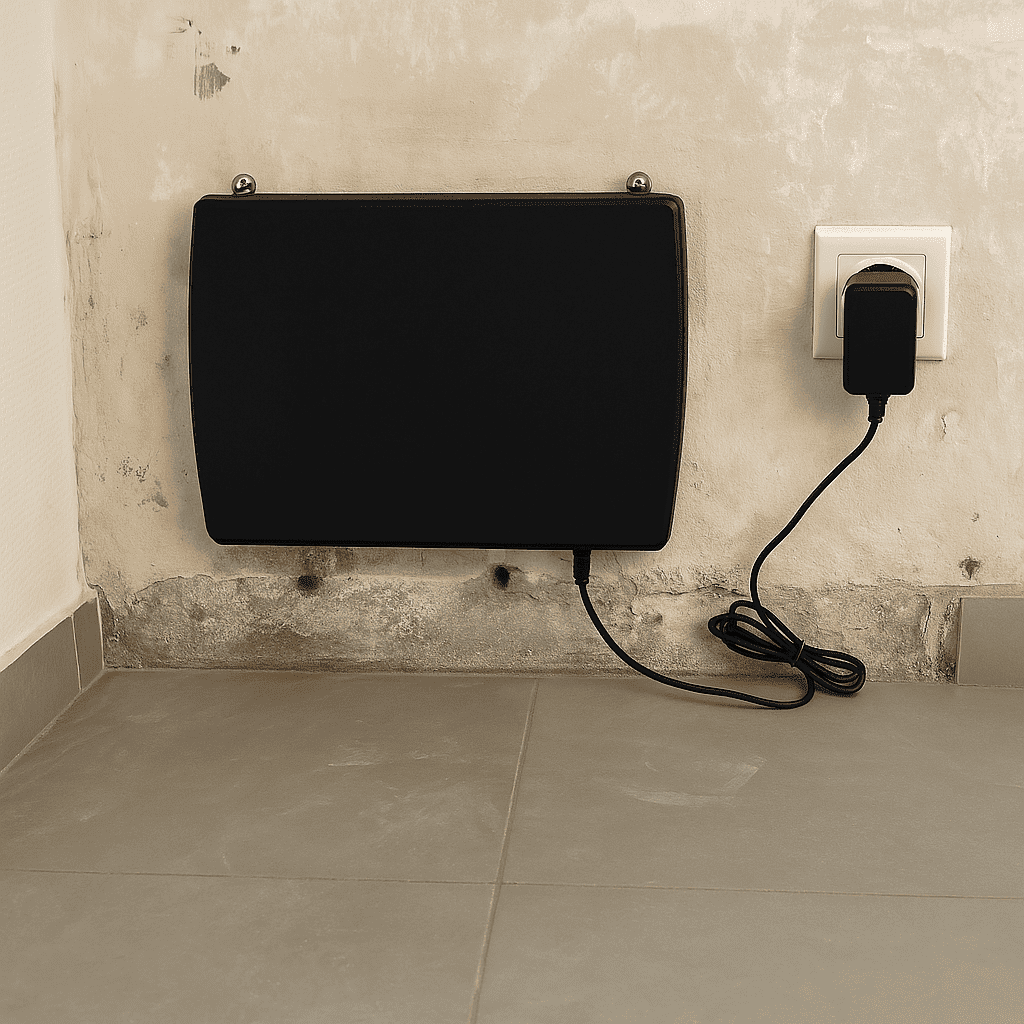
The anti-damp device works differently. It needs no drilling and no injection of any chemical product. Fitted at the bottom of a damp load bearing wall, it supports the gradual drying of masonry affected by rising damp.
At Humidistop, the ATE polarity inverters use electromagnetic technology, while the ATG models work without electricity thanks to geomagnetic technology. These devices act on the polarity of water molecules in order to limit the capillary rise inside the walls. An improvement is generally seen between 18 and 24 months, provided the installation recommendations are respected.
This solution is aimed above all at people looking for a treatment without major works, without drilling and suited to older houses. The devices are made in France, come with a 10 year guarantee and have been tested by the Emitech and Nexio laboratories.
Injection or device: how to choose well
The right choice depends on your building, the type of wall and the real origin of the damp. Injection acts directly within the masonry but calls for building work, drilling and good compatibility with the wall. The anti-damp device stays a non invasive solution that respects the structure and allows a gradual drying.
Before any decision, it is essential to check that the problem really comes from rising damp, and not from a leak, a side infiltration or a ventilation fault. An effective treatment always begins with a proper diagnosis.
Frequently asked questions about injection and the no-works alternative
Is rising damp injection permanent?
Injection creates a chemical barrier that is meant to last over time. Its effectiveness depends, however, on how well the product spreads through the whole thickness of the wall. On thick or uneven masonry, the barrier can stay incomplete and let the damp move through in places.
Can an anti-damp device replace injection?
On clearly identified rising damp, the anti-damp device is a no-works alternative to injection. It does not damage the walls and supports a gradual drying. On the other hand, neither of these two methods treats an infiltration or a leak, which call for a different kind of repair.
Drying your walls without drilling is possible
If you want to avoid a heavy job, the anti-damp device is a serious alternative to resin injection. You can discover the ATE and ATG models in our online shop, or send us a few photos of your walls through our contact page to be guided towards the most suitable model.