My account
February 16, 2026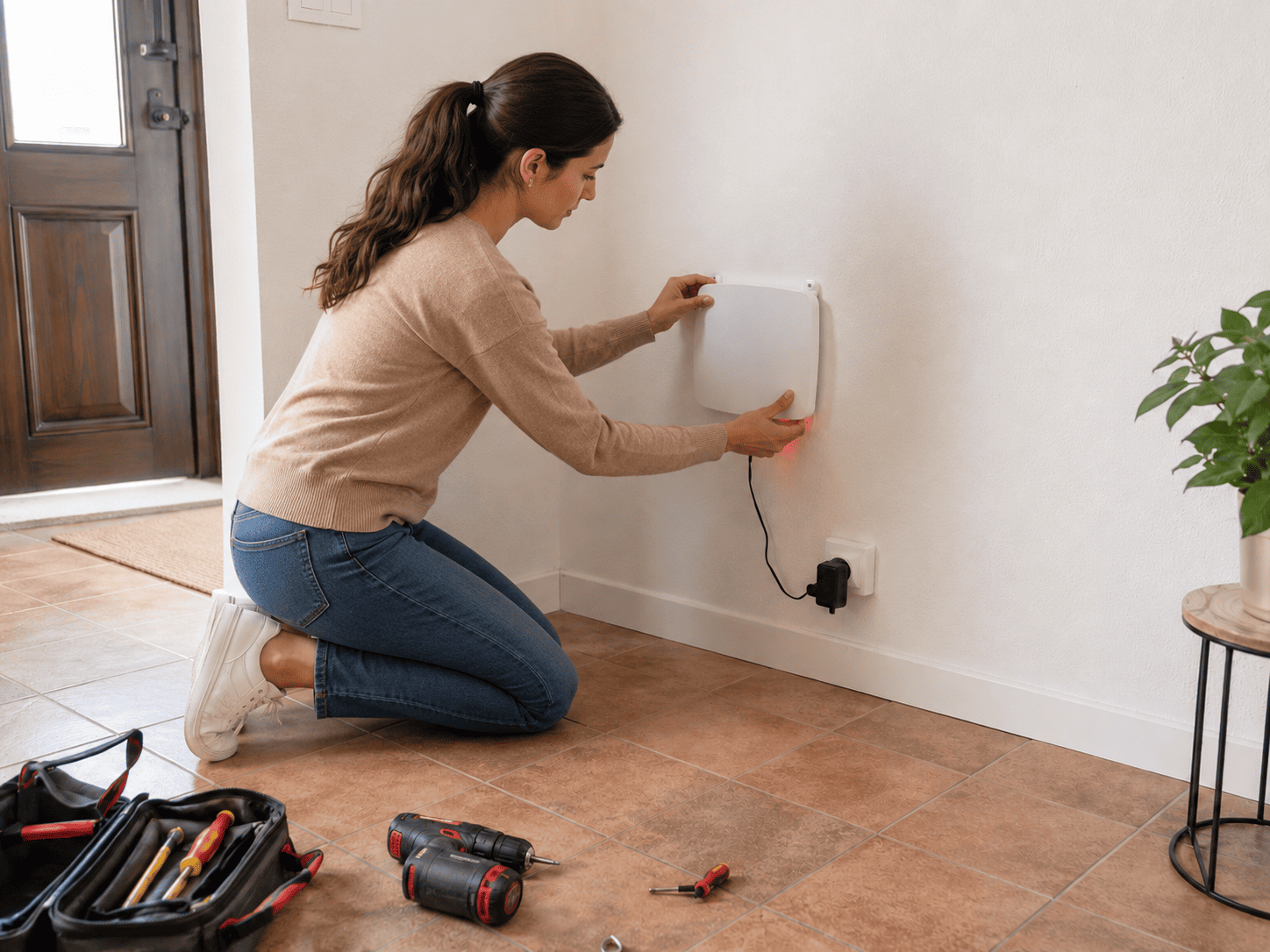
Rising damp: signs to recognise at home
May 13, 2026
Damp at the bottom of a wall needs investigation before you order a device. Rising damp is one possibility. A leaking pipe, water entering at a floor junction or condensation on a cold wall base can leave similar marks.
Record the position and timing
Photograph the whole wall and close-up details, with dates. Note the height, materials and changes after rain, bathing or heating. Look behind furniture where accessible. A tide mark or white deposit is a clue, not confirmation that water is rising from the ground.
Check inside and outside
Examine accessible pipes, drains, gutters, cracks and junctions around doors and terraces. Compare outside ground levels with the floor inside. Raised ground can contribute to different moisture routes. If the source remains uncertain, arrange an investigation before selecting a treatment.
When can a device be considered?
Humidistop offers ATE and ATG for identified capillary rising damp. ATE is recommended first when the specified damp load-bearing wall and permanent power supply are available. ATG operates without an electrical connection. Neither repairs the leaks or condensation causes above. Send a plan and photographs for product advice, recognising that unclear building defects may require an on-site assessment.
Technical reference on investigation and traditional buildings: Historic England. This source is not a test or endorsement of ATE/ATG devices.