Damp Proofing Without Injection: What Are the Options?
September 7, 2026
Resin Injection or Wall drying device: What Are the Differences?
September 7, 2026Wall Drying Device: How to Choose the Right One
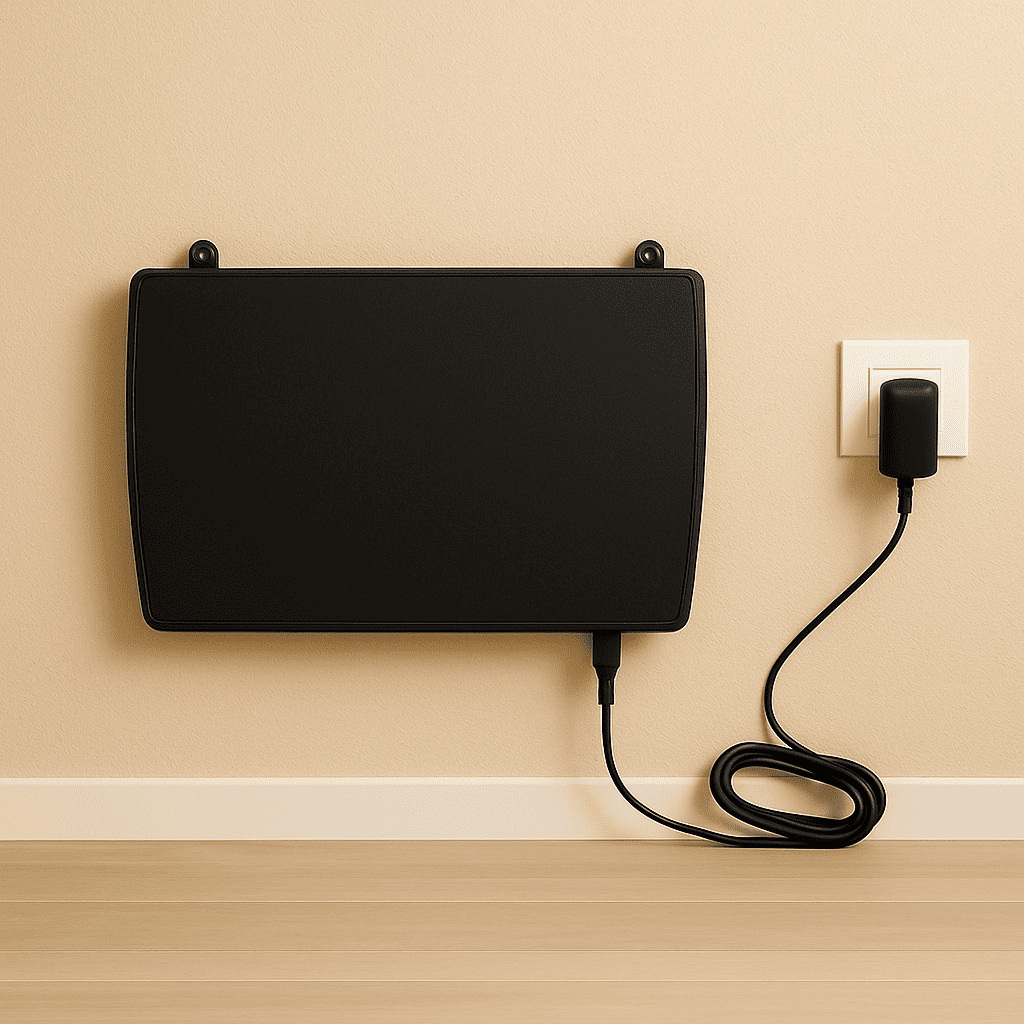
A wall drying device acts on the water held inside the masonry. In other words, it pushes that water back down towards the ground. Then the right model depends on three things: the distance to cover, the presence of a permanent earthed socket, and how the wall is built. So here is each criterion, explained plainly.
What a wall drying device actually treats
A wall drying device based on wall drying technology targets one form of damp only. Indeed, it addresses moisture that comes from the ground and climbs through the masonry. Concretely, it acts on the polarity of the water molecules inside porous materials. The water then moves back down, and the wall dries.
This point matters before you buy anything. In fact, these units treat neither water penetration, nor flooding, nor surface mould.
Take two examples. First, a localised patch that appears after heavy rain. It signals a weatherproofing defect. Second, black mould in the corners of a poorly ventilated room. That signals condensation. Yet neither situation calls for a unit of this kind.
Finally, a wall drying device does not dry the air in a room. Instead, it works on the water inside the structure of the wall.
Confirm where the damp comes from
Before you compare models, make sure the moisture really rises from the ground. In practice, three checks usually settle it.
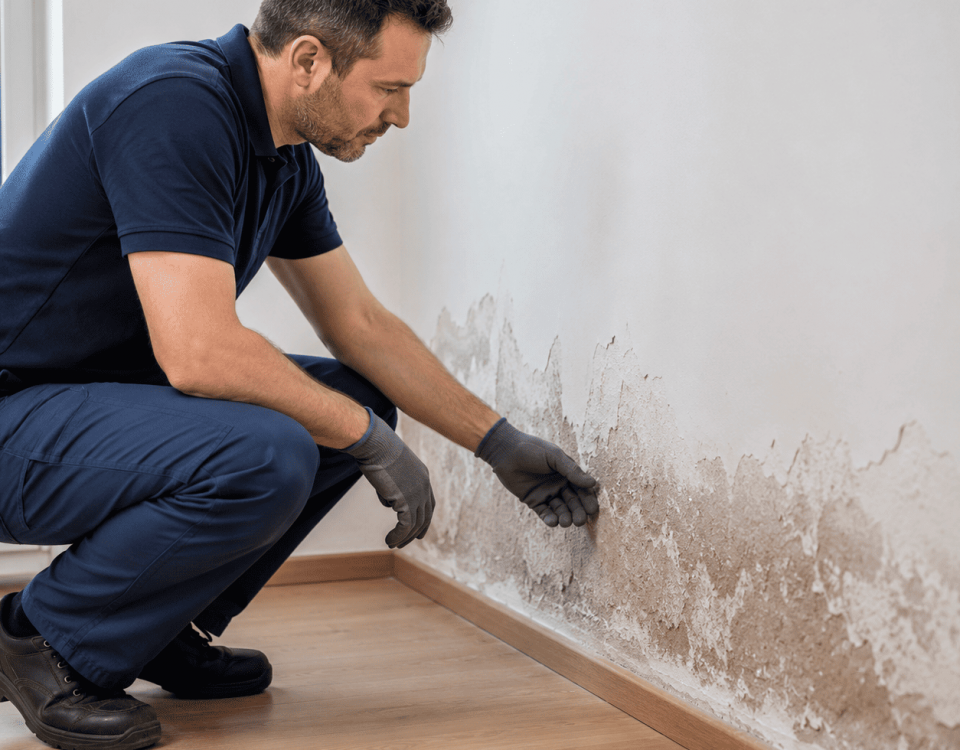
First, look at the shape of the mark. Does it follow the base of the wall continuously, at a fairly even height? Rising damp draws a band, not a spot.
Second, check both faces of the wall. Do you see it inside and outside? If so, the water sits within the thickness of the masonry.
Third, watch the pace. Does the mark change slowly, over months, with no link to rain? By contrast, a sudden appearance after a storm points to penetrating damp.
When these three signs line up, a wall drying device becomes relevant. That holds especially when white salt deposits form low down. However, if you still hesitate, simply send us photographs before buying.
The criteria that determine the right wall drying device
The distance to cover
This criterion comes first. Indeed, a wall drying device acts within a set radius around its installation point. That radius decides how much of the building really gets treated.
The Humidistop range offers three ranges of action. The ATE LC15 covers 15 metres in diameter, so 7.5 metres of radius. Therefore it suits one room or a limited zone. The ATE LC30 covers 30 metres in diameter. That range targets a whole house. Finally, the ATE MAX covers 60 metres and suits large buildings.
Watch the reasoning here. Do not start from floor area. Instead, measure the distance between the planned position and the furthest wall you need to treat. For example, a long narrow building often needs more range than its floor area suggests.
Whether a permanent power supply exists
This criterion separates the two technologies. Indeed, an electromagnetic unit needs an earthed socket available at all times. By contrast, a geomagnetic unit runs with no supply whatsoever.
In a home occupied all year, therefore, we recommend the electromagnetic version first. It works from the moment you plug it in and produces a constant field. However, without permanent power or a nearby earthed socket, the geomagnetic version becomes the right answer.
How the wall is built
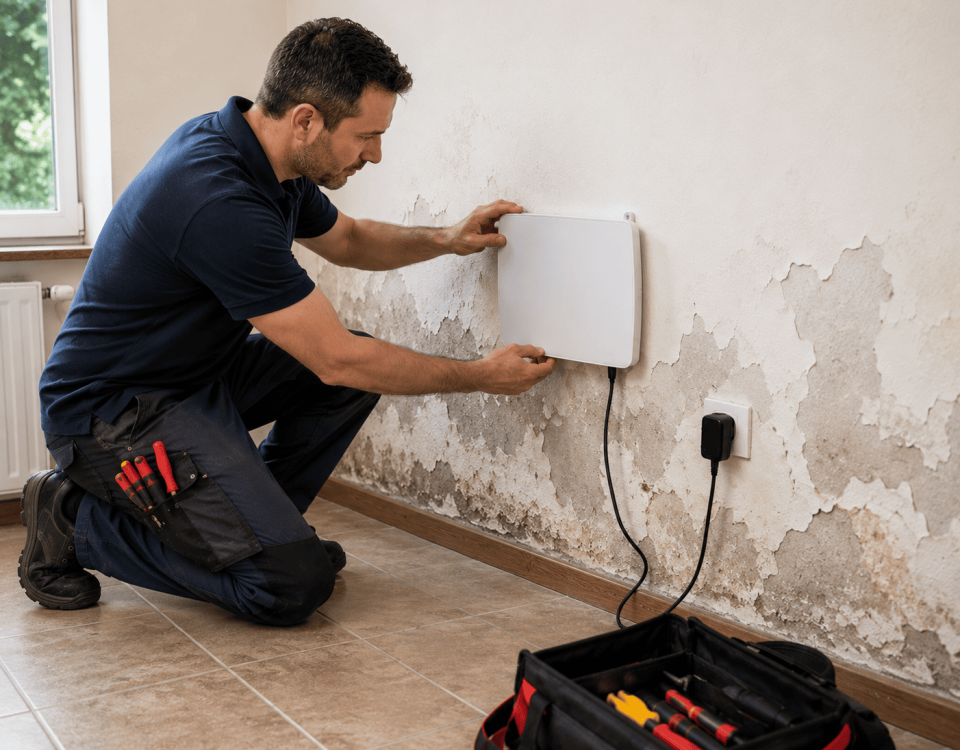
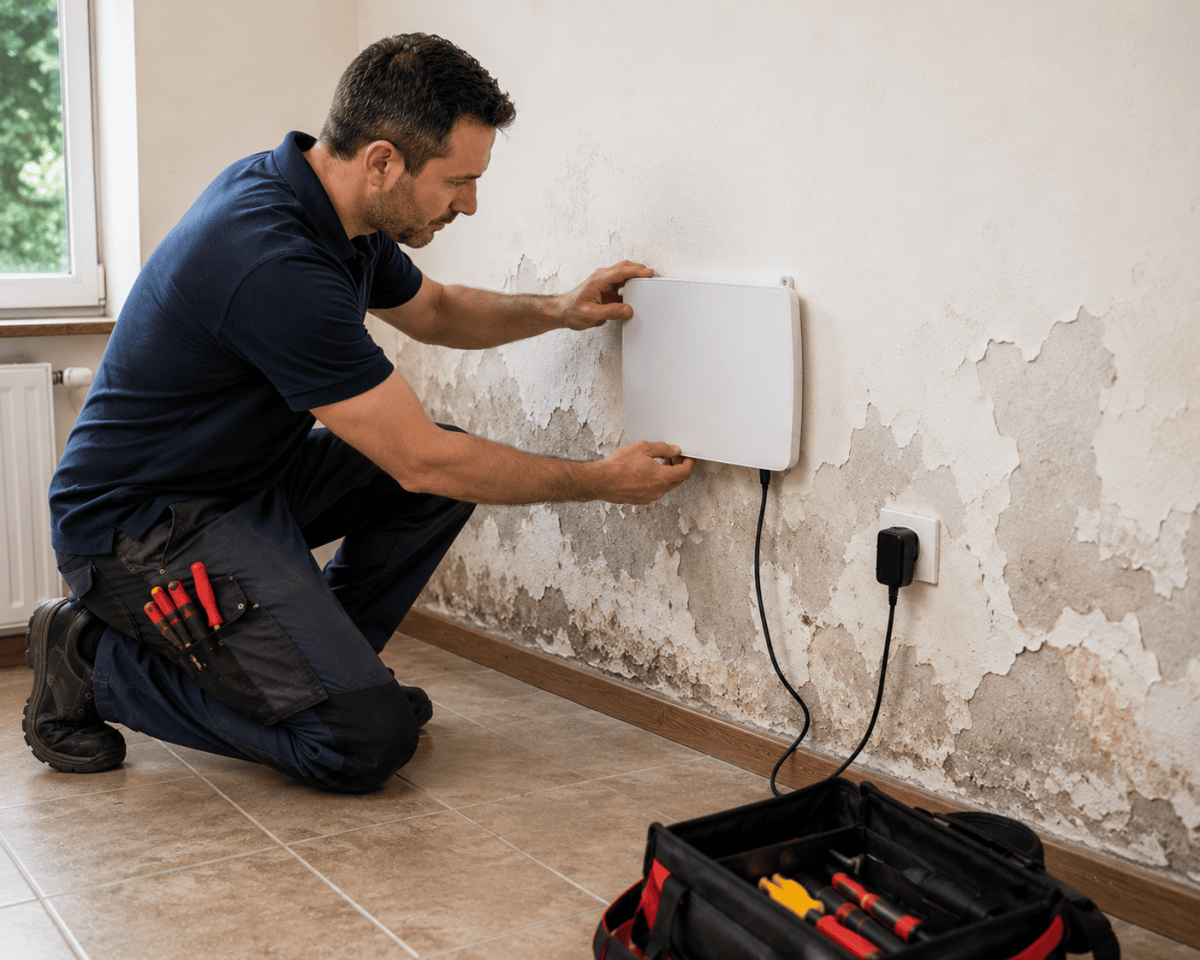
A wall drying device fits at the base of a damp load-bearing wall, flat against the masonry. Yet dry lining, a stud partition or internal insulation prevent that contact. As a result, they undermine the treatment.
So check one point before buying. Does a load-bearing wall affected by damp exist, accessible low down, with nothing in front of it? If the wall is lined, plan to remove the lining at the installation point.
As for the material, it dictates no particular model. Stone, brick, mortar and block all accept the treatment. By contrast, they influence the duration. A thick, heavily saturated wall dries more slowly than thin masonry.
The two technologies
Electromagnetic ATE units
An ATE unit emits low-frequency electromagnetic waves. These waves invert the polarity of the water molecules. Consequently, the moisture heads back towards the ground.
It runs continuously, silently, without vibration and without chemicals. Moreover, it plugs into an earthed socket, with no drilling. Its consumption reaches about 0.75 W, so roughly €15 a year. Finally, it needs no maintenance.
Therefore we recommend it first for very wet walls and for buildings that need sustained treatment. Indeed, it works faster than a passive unit.
Geomagnetic ATG units
An ATG unit uses the Earth’s natural magnetic field. It captures that field, then modifies it. In this way it emits a signal that acts on the water molecules and neutralises their climb. Afterwards, the moisture leaves by evaporation.
It uses no electricity. In addition, it holds no battery and needs no maintenance. It stands on a stable surface, or fixes to the wall without drilling. In short, it stays entirely passive and silent.
However, positioning matters enormously here. So follow the instructions supplied with the unit closely.
What to check before buying a wall drying device
The damp solutions market stays very uneven. Nevertheless, a few objective points allow a serious comparison.
First, electromagnetic compliance. The EMITECH laboratory in Toulouse tests our units. Moreover, the ATE LC15, ATE LC30 and ATE MAX models hold EMC and EMF certification.
Second, manufacturing. An engineering office in Toulouse designs the units. Then SYSELEC assembles and builds them. That electronics company has operated since 1980, in the Tarn region of France. Finally, its factory holds ISO 9001 certification.
Furthermore, the warranty. Every ATE and ATG unit carries a 10-year manufacturer’s warranty. In other words, the commitment matches a treatment that unfolds over a long period.
Finally, treat result promises with care. Indeed, drying advances gradually, at a pace specific to each building. When you follow our guidance, you generally see improvement between 18 and 24 months. Therefore any claim of an immediate result deserves caution.
What a wall drying device costs
Prices vary with range and technology. We sell direct, with no intermediary.
The ATE LC15 costs €1,490, the ATE LC30 €1,890 and the ATE MAX €2,290. On the geomagnetic side, the ATG LC15 costs €1,490 and the ATG LC30 €1,890. Moreover, delivery stays included, and we dispatch within 7 days with tracked shipping. Finally, you can pay in three or four instalments. Current prices appear in the shop.
To put that budget in context, look at running costs too. An electromagnetic unit uses about €15 of electricity a year, with no consumables and no servicing. A geomagnetic unit uses nothing. In addition, no building work follows: no drilling, no cutting, no making good.
Frequently asked questions
Do I need one wall drying device per room?
No. Indeed, a unit covers a radius around its installation point, whatever the internal layout. Therefore the number depends on the distance to cover, never on the number of rooms.
Can the unit go on any wall?
No. It needs the base of a damp load-bearing wall, a flat surface and direct contact with the masonry. By contrast, never mount it on dry lining.
Should I choose an electric or a passive unit?
That depends on your installation. If an earthed socket stays available at all times, choose the electromagnetic version. It works from the moment you switch it on. Otherwise, the geomagnetic version answers the need perfectly.
Can I fit a wall drying device myself?
Yes. Indeed, installation needs neither drilling nor building work. You plug in an electromagnetic model, and you position a geomagnetic one. However, follow the positioning instructions in the manual carefully.
What if the origin of the damp stays unclear?
Send us a few photographs of the affected walls. Then we point you in the right direction, free of charge and with no site visit.
In short
Three questions settle the choice. First, does the moisture genuinely rise from the ground? Second, what distance must the unit cover from its installation point? Third, does an earthed socket stay available at all times? The answers give you the range and the technology.
To compare models, visit the Humidistop shop. And if you still hesitate, the contact form lets you get an opinion from a few photographs.