Wall Drying Device: How to Choose the Right One
September 7, 2026
Plasterboard on damp walls: what the plasterer checks before boarding
September 28, 2026Resin Injection or Wall drying device: What Are the Differences?
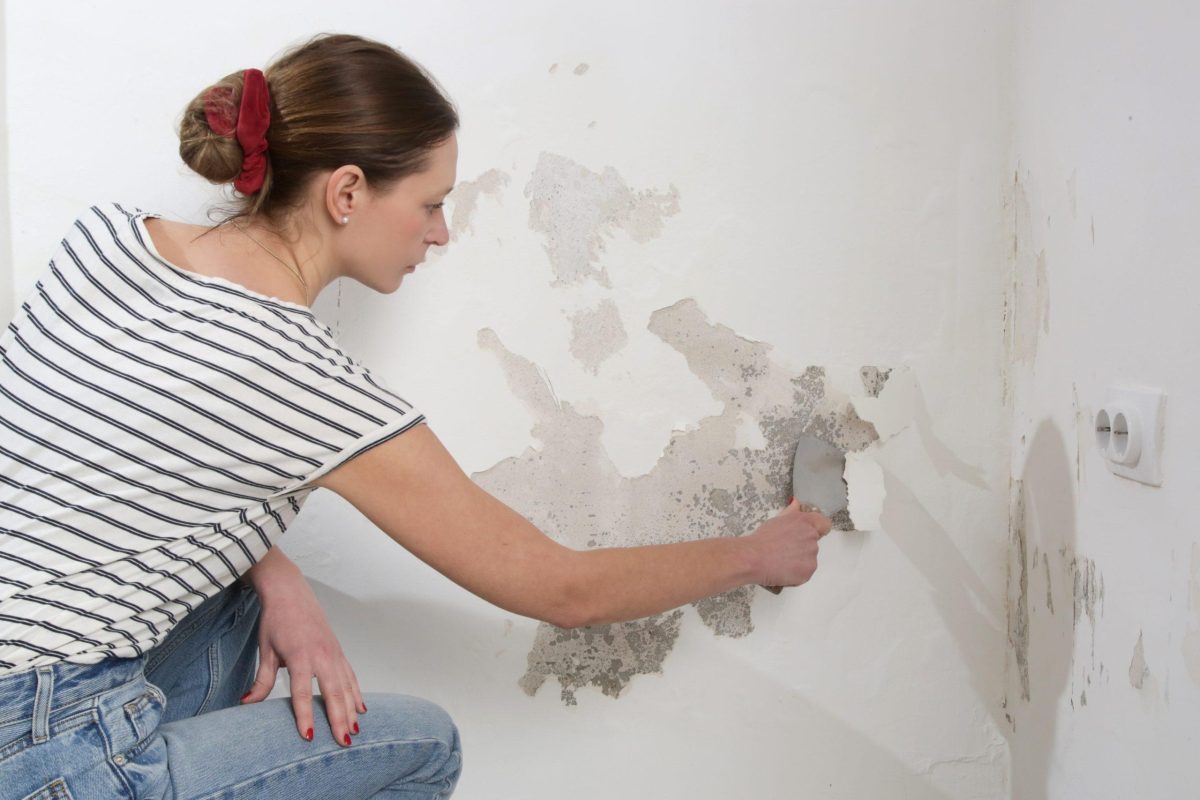
Resin injection and a wall drying device both target rising damp. However, they do completely different things. Indeed, one builds a barrier inside the masonry, while the other acts on the water without touching the wall. So here is what really separates them, and what should guide your choice.
Resin injection and the wall drying device: two opposite logics
Resin injection tries to block the water. Concretely, it creates an impermeable horizontal cut at the base of the wall. In short, you add material inside the masonry to bar the way.
A wall drying device follows another logic. It changes how the water already present behaves, so that it moves back down. In other words, you add nothing: instead, you act on the circulation.
That difference in principle explains everything else. Indeed, it determines the work involved, the impact on the wall, the reversibility, the timescale and the suitable cases.
Resin injection: principle and practice
How the work goes
First, the contractor drills a row of holes at regular intervals along the base of the walls. Then he injects a water-repellent product, under pressure or by gravity depending on the system. That product must spread through the material. Next, it must meet the neighbouring holes to form a continuous barrier. Finally, the holes get filled again.
The operation concerns load-bearing walls, inside and outside. Moreover, it demands clear access along the whole length. Therefore skirting boards, dry lining and low finishes often have to come off first.
Points to watch
Everything depends on how the product spreads. On regular masonry, that diffusion stays predictable. By contrast, on older buildings it becomes much less so. Indeed, uneven stones, bricks, lime mortar and voids all disturb the product. Yet a poorly impregnated zone lets water through. In other words, the barrier only works if every point holds.
Furthermore, the work stays irreversible. Once the product spreads, the wall changes for good. As a result, if the outcome disappoints, nobody goes back.
Finally, the site comes into your home: drilling, dust, access to the walls, then making good.
The wall drying device: principle and practice
How the work goes
Water molecules carry a positive and a negative pole. That polarity helps them climb through the capillaries. Yet a wall drying device emits a low-frequency signal that acts on it. Consequently, the water heads back towards the ground. Afterwards, the wall dries gradually through evaporation.
The unit fixes at the base of a damp load-bearing wall, ideally at the centre of the treated area. It needs a flat surface and direct contact with the masonry. By contrast, never mount it on dry lining. Finally, no hole is required and no product enters the wall.
At Humidistop, two versions exist. The ATE units use electromagnetism. They plug into an earthed socket and use about 0.75 W, so roughly €15 a year. The ATG units use the Earth’s magnetic field. Therefore they run without electricity and without maintenance.
Points to watch
Here, positioning makes the result. Indeed, a correctly sized unit mounted on dry lining will deliver nothing. The same applies if it sits too far from the affected walls.
Next, the sizing must match the real distance to cover. Count 15 metres in diameter for the ATE LC15, 30 metres for the ATE LC30 and 60 metres for the ATE MAX. Yet walls beyond that radius receive no treatment.
Finally, drying advances slowly. When you follow our guidance, you generally see improvement between 18 and 24 months.
The differences that decide the choice
Impact on the wall
This gap stands out most. Indeed, resin injection drills the masonry and introduces a product. By contrast, a wall drying device never touches the structure. It fixes on the surface and runs continuously.
Reversibility
Resin injection cannot be undone. By contrast, you remove a unit, and the wall keeps no trace. Consequently, that difference weighs heavily on an older building or on a property heading for sale.
Behaviour on irregular masonry
Here lies the structural limit of resin injection. Indeed, the more irregular the masonry, the harder the diffusion becomes to control. By contrast, a wall drying device does not depend on that regularity, since it spreads nothing into the material.
What it means for the occupant
Resin injection remains a building site. It needs clear access, drilling, dust, then making good. By contrast, fitting a unit takes one short visit, with no work at all.
Time before results
In both cases, drying takes time. Indeed, a saturated wall releases its water slowly, whatever method stopped the supply. For our units, count 18 to 24 months typically. In other words, neither solution dries a wall in a few weeks.
What the price covers
Resin injection means a contractor’s quote. It includes labour, product, the length treated and the making good. A unit, by contrast, means buying equipment.
In our range, sold direct, the ATE LC15 costs €1,490, the ATE LC30 €1,890 and the ATE MAX €2,290. The ATG LC15 costs €1,490 and the ATG LC30 €1,890. Moreover, delivery stays included and we dispatch within 7 days. You can also pay in three or four instalments. Afterwards, count about €15 a year for an electromagnetic model, and nothing for a geomagnetic one. Current prices appear in the shop.
When to prefer one over the other
Resin injection keeps its logic in one precise case. It needs regular, homogeneous masonry, access along every wall, and an owner who accepts both a building site and a permanent change.
By contrast, a wall drying device answers the opposite situations. Therefore it suits older or irregular masonry, period properties, and occupied homes where a site would disrupt daily life. Moreover, it keeps the work reversible. Finally, the geomagnetic version covers buildings with no permanent power supply.
However, one condition applies to both: you must first establish that the water rises from the ground.
What neither method treats
Both methods target rising damp. By contrast, they treat neither water penetration, nor flooding, nor surface mould.
Take two examples. First, an isolated patch appearing after heavy rain. That belongs to weatherproofing: roof, windows, façade cracks or pipework. Second, black mould in the corners of a poorly ventilated room. That belongs to condensation. Yet investing in a rising damp treatment changes nothing in either case. Our rising damp page sets out the signs that tell them apart.
Frequently asked questions
Can a wall drying device replace resin injection already carried out?
Yes, because the two do not conflict technically. When resin injection disappoints, often on irregular masonry, fitting a unit remains possible. However, check the real origin of the damp first.
Must dry lining come off in both cases?
That depends on the method. For resin injection, you need access along the base of every wall. By contrast, for a unit, only the installation point requires direct contact. Elsewhere, removing sealed finishes stays optional, although it helps evaporation.
Which one works faster?
Neither dries a wall quickly. Indeed, a saturated wall releases its water over a long period, whatever method cut off the supply.
Does the unit use much electricity?
No. An electromagnetic model uses about 0.75 W continuously, so roughly €15 a year. As for the geomagnetic model, it uses nothing.
What does the manufacturer guarantee?
Our ATE and ATG units carry a 10-year warranty. Moreover, SYSELEC builds them in France, in the Tarn region, in an ISO 9001 certified factory. That electronics company has operated since 1980. Finally, the EMITECH laboratory in Toulouse tests them, and the ATE LC15, LC30 and MAX models hold EMC and EMF certification.
In short
Resin injection adds a barrier inside the wall. By contrast, a wall drying device acts on the water without touching the wall. The first assumes regular masonry, a building site and a permanent change. The second leaves the structure intact, installs without work and stays reversible. As a result, it suits older or irregular masonry particularly well.
To find the model suited to your situation, visit the Humidistop shop. Otherwise, send a few photographs of your walls through the contact form.